Table Of Content
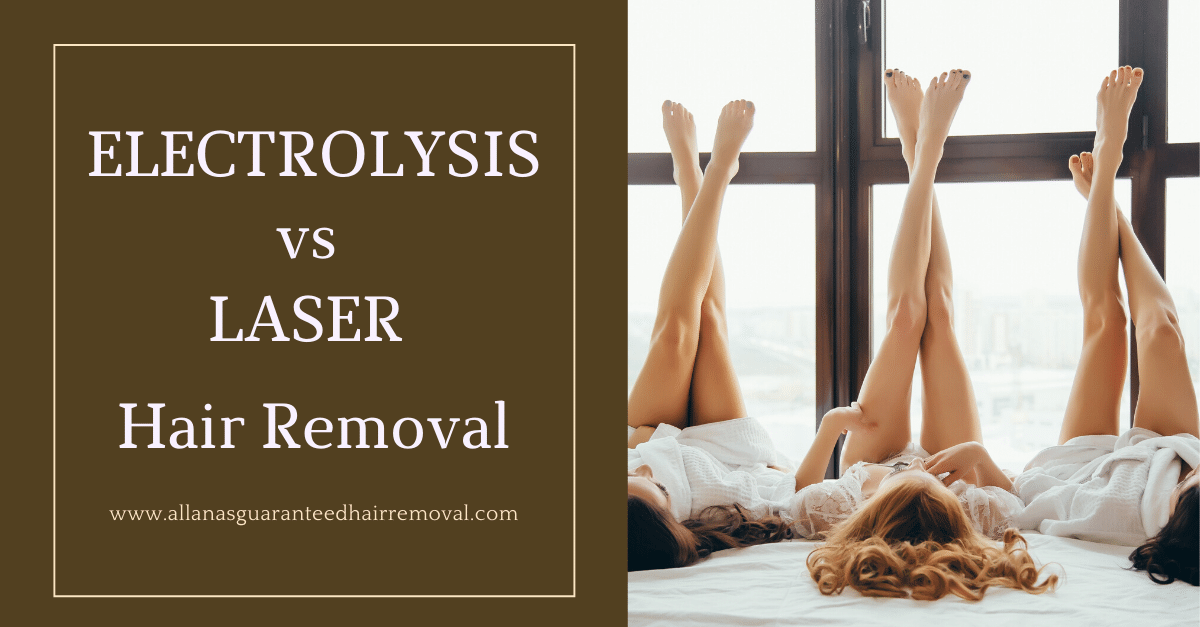
Those electric pulses heat up and destroy the individual follicles, one by one. The probe doesn’t exactly pierce the skin, but enters the hair follicle through its natural opening in the surface of the skin. If I've said it once I've said it a thousand times - everyone's pain threshold is different. Hair removal for sensitive skin or in sensitive parts like the bikini line can feel painful, or you may find having your legs lasered not too bad at all. Understanding the difference between electrolysis vs laser hair removal is a vital part of deciding which is better for you and your individual situation. Now that we have compared laser hair removal vs. electrolysis under different heads, it must be easy for you to understand which procedure will be beneficial.
Electrolysis Is the Permanent Hair Removal Option for Everybody
If laser hair removal is not for you, they may be able to refer you to a different treatment that would be more suitable for your coloring. Laser hair removal also has a dramatically lower risk than electrolysis of side effects like pigmentation and scarring. It’s a simple treatment that requires no “downtime” but produces an excellent result. Laser hair removal treatments are superior to electrolysis in most cases. Laser treatments both safer and has a higher efficacy rate, which is the reason why it’s the only hair removal service we currently provide. Although both methods are safe and FDA-approved, side effects of electrolysis may include pain from the electric current, redness, swelling, scabbing, scarring or changes to skin color.
How Effective Is Finasteride and Minoxidil for Hair Loss?
Each electrolysis session is typically done every four to six weeks. Therefore, the completion of electrolysis treatments can take a minimum of one year. Most people will see very similar results with either electrolysis or laser hair removal. Both hair removal treatments require multiple sessions and ongoing maintenance to maintain long-term results.
Recovery and Risks
However, it should be warned that previous tweezing and waxing can make the process a little more difficult. Tweezing and waxing can alter the shape of hair follicles, making it harder to get the epilator into the root. Additionally, electrolysis is only for the committed since it can take around a year and a half to see full results. Talk to your technician ahead of time to understand what you can expect. As for people with darker skin, they are not recommended to use laser hair removal therapy since the lasers cannot distinguish the pigment in the hair follicle from the pigment in the skin.
While one method uses laser light, the other makes use of shortwave radio frequencies to target hair follicles under the skin surface and damage them. Unlike laser hair removal, electrolysis works on all hair colors and skin types. But because your technician has to target each follicle individually, it might not be a great choice for large treatment areas. That said, it can be used anywhere on the body, including your face, with minimal downtime. Like laser hair removal, electrolysis depends on the hair growth cycle so maintenance will be in the form of follow-up treatments. “Large areas with dense hairs may require more time to treat and this might mean that these areas are broken up into several treatment sessions.” However, once the unwanted hair is gone, it is gone forever.
Follow Us
“Laser focuses on pigment so it is not incredibly effective on lighter hair,” he says. But keep in mind that one electrolysis treatment won’t give you immediate results. “Laser is usually very quick but multiple treatments are required,” Dr. Teller says. Laser hair removal is a procedure to remove unwanted hair using heat to damage the hair follicle. When done by a trusted technician, it can guarantee long-term results with minimum side effects. It works best on those with contrasting skin and hair colors, for example, light skin and dark hair.

Beyond those concerns, Dr. Bhanusali says, every laser hair removal procedure comes with the risk of hyperpigmentation or hypopigmentation (dark or light spots), especially if you have darker skin, or even a tan. The best thing you can do is see a board-certified dermatologist for your hair removal, particularly if you have dark skin. Luckily, skin and hair type do not influence electrolysis treatment at all. "It is not dependent on hair color, size or area treated and will permanently remove all hair on any skin color," says Janet Stansfield of the British Institute and Association of Electrolysis (BIAE). Electrolysis has the same effect on any hair type and any skin color. Laser treatment is most effective on people with light skin and dark hair or vice versa.
Process and Safety
Minor side effects are common, but they tend to go away within a day. For aftercare you can use pain relivers to manage pain and ice compress to manage swelling and inflammation. The dermatologist may give you over-the-counter pain relief medications or in rare cases, steroids to combat pain and other symptoms. When the root is destroyed, the follicle is unable to produce hair.
When is the best time to get electrolysis?
4 Best At-Home Laser Hair Removal Devices - Healthline
4 Best At-Home Laser Hair Removal Devices.
Posted: Thu, 18 Apr 2024 07:00:00 GMT [source]
Another rare side effect is the treated hair turning gray or more hair growing around the treated areas. Lasers can selectively target dark, coarse hairs while leaving the surrounding skin undamaged. Lasers are useful for removing unwanted hair from the face, leg, chin, back, arm, underarm, bikini line, and other areas. However, you can't get laser done on your eyelids or the surrounding areas or anywhere that has been tattooed. You’ll have to decide for yourself which method of hair removal you want to go with.
As with any other cosmetic treatment, it is critical that you work with a board certified dermatologist or trained technician. Always ask for a consultation before committing to a treatment plan. Since electrolysis uses radio frequencies rather than light, it attacks the follicle itself and does not rely on pigment making it a viable option for all types of complexions.
"Various wavelengths can also be used for lighter hair, but the results are not always as good." "Laser hair removal uses a laser device that targets the dark hair follicle," says Dr. Farhang. It works best on dark, thick hair and fair skin (like that of your armpits, which rarely see the light of day). The darker the hair and the lighter the skin, the better laser hair removal works. Like laser hair removal, electrolysis also requires multiple sessions to achieve the desired results.

No comments:
Post a Comment